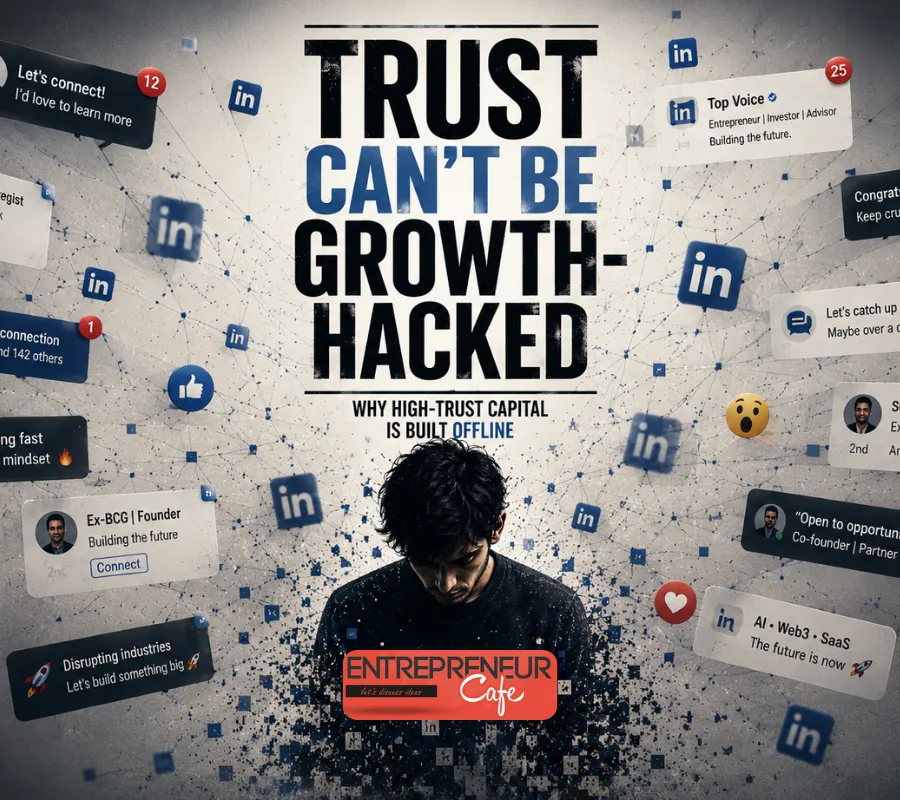
If you look at the current state of startup advice, there is an underlying, highly dangerous assumption: that human relationships can be growth-hacked.
We are surrounded by digital tools promising to optimize the most complex variable in business—human trust. There are "founder matching" apps that function like Tinder for enterprise SaaS. There are automated LinkedIn outreach sequences designed to solicit a technical co-founder at scale. We treat building a core team the same way we treat running a top-of-funnel marketing campaign: maximize reach, A/B test the pitch, and optimize for conversions.
But if you look at the autopsy reports of the startups that failed in the Indian ecosystem last year, a lack of product-market fit was only half the story. The other half was co-founder fallout.
When you strip away the PR hype, building a startup is effectively going to war in a resource-constrained environment. You cannot algorithmically generate the level of trust required to survive that. High-trust capital is not built through cold DMs or 30-minute Zoom introductions. It is built offline, over unstructured time, in neutral spaces like cafes.
Here is the operational reality of why digital networking is fundamentally broken, and how you should actually be building your Community Capital.
The Depreciation of Digital Trust
The fundamental problem with sourcing core team members or early-stage advisors through digital platforms is information asymmetry.
LinkedIn and X (formerly Twitter) are not reality; they are highly curated public relations platforms. They are optimized for signaling success, not for revealing operational truth. When every profile is polished to perfection and everyone is "crushing it," the signal-to-noise ratio hits zero. You are reading a brochure, not a balance sheet.
When you attempt to build a high-stakes partnership purely through digital channels, you are building on a foundation of zero-friction interactions. It is easy to agree on a vision over a scheduled video call when the stakes are purely theoretical. But a startup is not theoretical. It is missed payrolls, catastrophic server crashes at 2:00 AM, and brutal pivot decisions.
Digital avatars fail the stress test because they were never designed to handle friction. You don't know how a potential co-founder reacts to bad news, how they treat service staff, or how they handle their own ego when an idea is challenged. Those are the data points that actually determine the survival of your company, and none of them can be extracted from a PDF resume.
The Unit Economics of "Co-Founder Friction"
Let us translate trust into a hard operational metric.
When a founding team possesses deep, offline-forged trust, their operational velocity is exponentially higher. They don't need to spend three hours debating the intent behind a strategic pivot; they trust the operator, so they execute the play. High trust reduces transaction costs.
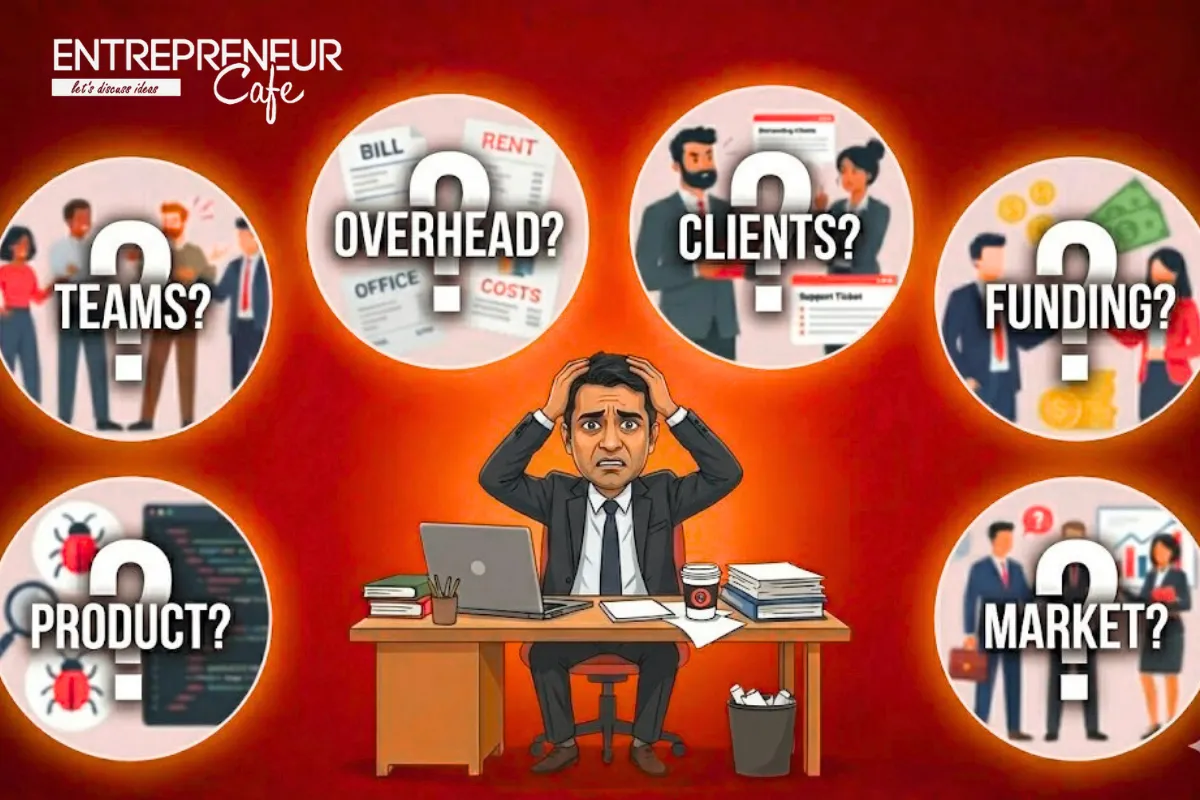
Conversely, a lack of deep trust is a catastrophic drain on your operational runway. If you met your co-founder on a matching app three months ago, every disagreement over equity, product roadmaps, or hiring becomes an existential threat to the company. You spend 80% of your energy managing the relationship and 20% managing the business.
In a market where speed is your only true competitive advantage against legacy corporations, "co-founder friction" will kill your unit economics faster than a bad ad campaign. You will bleed capital simply because your leadership team cannot make decisions fast enough.
The Physics of the "Third Space"
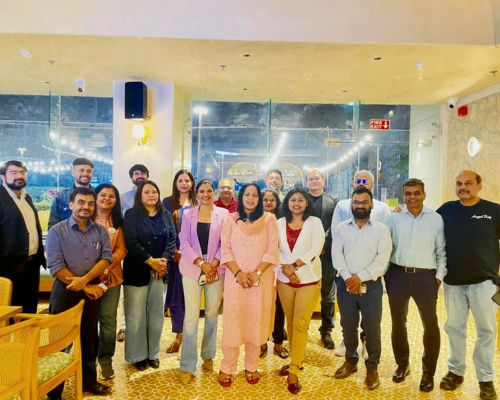
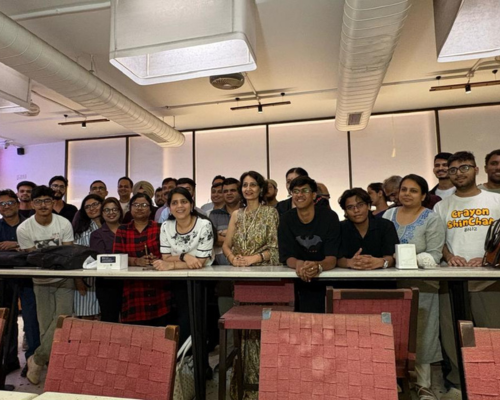
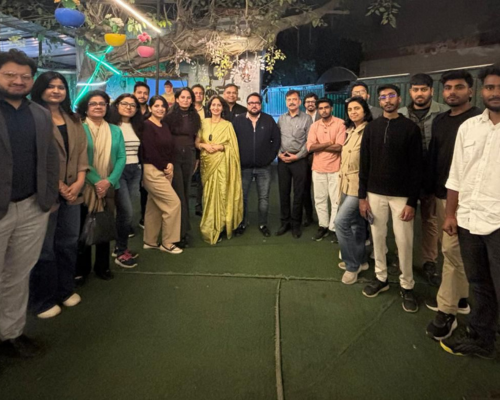
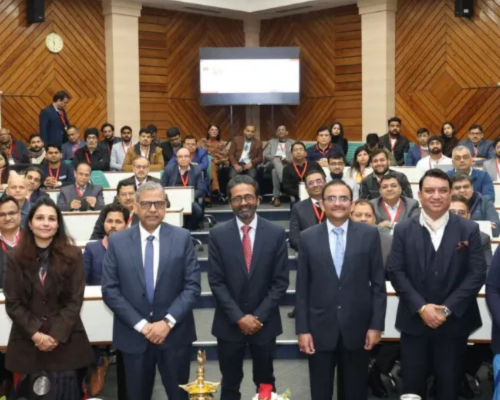
This brings us to the core philosophy of Entrepreneur Café. Why do the most high-leverage relationships originate in physical, informal settings? Why a cafe?
Sociologists refer to the cafe as the "Third Space"—a neutral ground that is neither the high-stress environment of the office (the first space) nor the private retreat of the home (the second space). The architecture of the Third Space is critical for engineering serendipity and deep vetting.
1. Unstructured Time
Zoom calls have agendas, hard stops, and an implicit demand for immediate productivity. A meetup at a cafe has unstructured time. It is in the tangents, the side conversations after the main event, and the casual debates over coffee that you actually see how an operator thinks. You move past the rehearsed pitch deck and enter reality.
2. Stripping the Hierarchy
When you meet in a boardroom, the power dynamics are physically built into the room. When you meet in a cafe, those dynamics are instantly neutralized. You are just two operators sitting across a table. This environment forces authenticity. You cannot hide behind a corporate backdrop; you have to rely on the actual substance of your ideas.
3. The Proximity Principle
Startups require massive, localized effort. While remote work is incredible for scaling individual contributor tasks, early-stage zero-to-one building requires dense, high-bandwidth communication. Meeting locally forces you to build a network in your immediate geographic reality. It roots your business in a physical community that can offer immediate, tangible support.
The Playbook for Raising Community Capital
Just as you raise financial capital to fund your operations, you must actively raise "Community Capital" to fund your resilience. Here is the operator's playbook for building a network that actually matters.
1. Abandon the Pitch Deck
When you attend an offline meetup, leave the aggressive sales pitch at the door. Do not walk into the room looking for what you can extract. The most successful founders at E-Cafe operate on a "give-first" ledger. They diagnose problems for others, offer introductions, and share hard-earned supplier contacts. Build a reputation as an asset to the room, and the room will eventually become an asset to you.
2. Optimize for "Builders," Not "Speakers"
Every networking event has two types of people: the Speakers (who want to talk about their theoretical valuations and Twitter threads) and the Builders (who are quietly figuring out how to optimize their local logistics). Gravitate toward the Builders. You can identify them because they ask specific, localized, operational questions rather than speaking in broad macro-trends.
3. The Compounding Effect of Consistency
Community capital operates on compound interest. Showing up to one meetup, handing out five business cards, and leaving is mathematically useless. High-trust relationships require sustained physical proximity over time. You must show up consistently enough that people stop treating you as a visitor and start treating you as a fixture.
The next time you find yourself aggressively typing out a cold outreach sequence to find a technical lead or a strategic partner, close the laptop. Find the smartest room in your city, buy a coffee, and start building the asset that actually dictates your survival.