For the last five years, the Indian Direct-to-Consumer (D2C) playbook was terrifyingly simple. You found a white-label manufacturer, slapped a minimalist pastel logo on a generic product, and poured millions of venture capital dollars into Facebook and Instagram performance marketing.
You bought your revenue. You optimized your Return on Ad Spend (ROAS) on a daily dashboard. You celebrated massive Gross Merchandise Value (GMV) milestones on LinkedIn, raised another round of funding at a higher valuation, and repeated the cycle.
It was a brilliant strategy for a zero-interest-rate environment where capital was infinite and digital ad inventory was cheap. But the ecosystem has fundamentally shifted. The era of "growth-at-all-costs" is officially over, and the autopsy reports of failed D2C brands are stacking up.
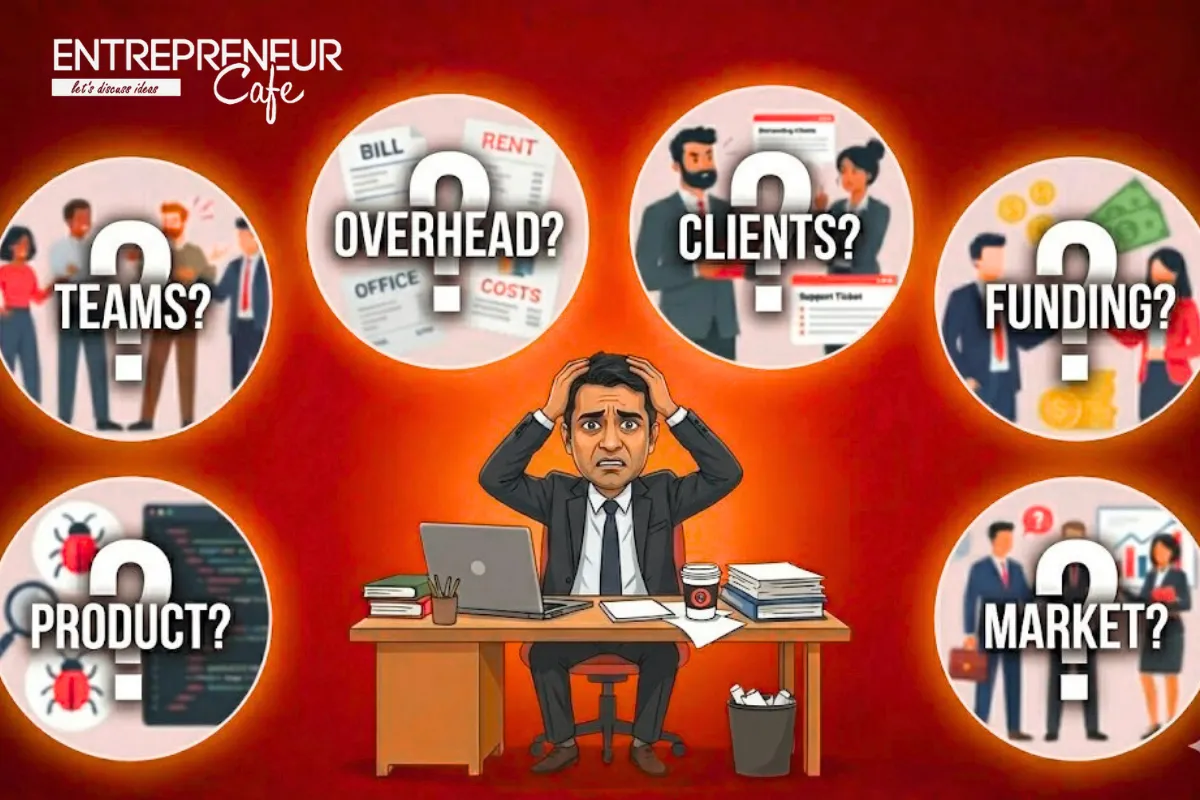
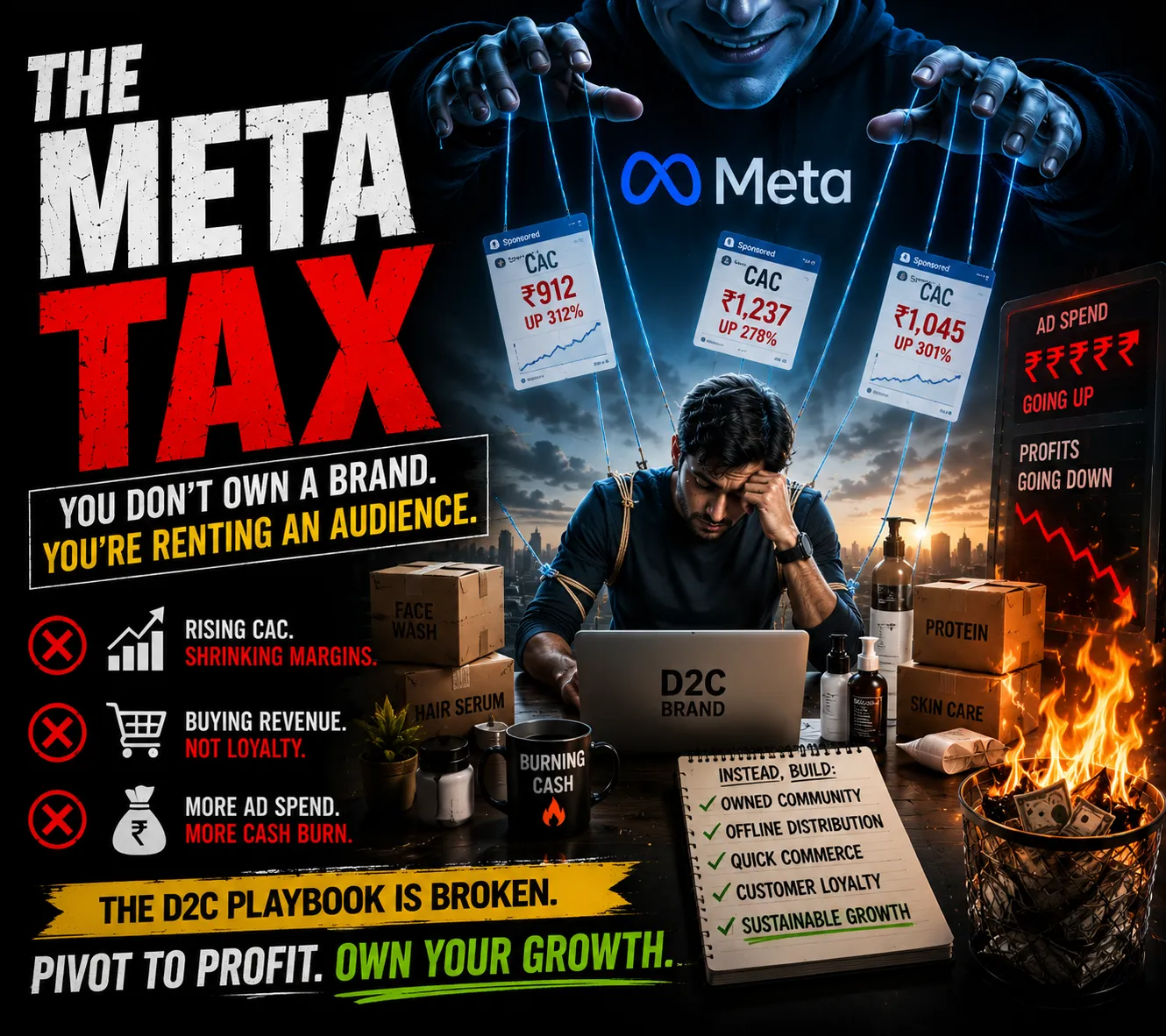
When you strip away the PR hype and look at the actual unit economics of the consumer brands shutting down this quarter, the cause of death is almost always the same: catastrophic Customer Acquisition Cost (CAC) inflation. If your entire distribution strategy relies on buying digital ads, you do not own a brand. You are simply renting an audience from Meta and Google, and the rent just went up.
Here is the unfiltered reality of why the digital-first D2C model is broken, and the exact operational pivot you need to make to survive.
The Meta Tax: When CAC Outstrips LTV
The fundamental math of a consumer business dictates that the Lifetime Value (LTV) of a customer must be significantly higher than the cost to acquire them (CAC). A healthy ratio is typically 3:1.
Today, for many Indian D2C brands, that ratio is inverted.
As more brands flood the digital ecosystem, the bidding war for the exact same premium urban consumer has driven CPMs (Cost Per Mille) and CPCs (Cost Per Click) through the roof. The "Meta Tax"—the percentage of your revenue that immediately goes to Mark Zuckerberg just to keep your store visible—is crushing contribution margins.
You are paying Tier-1 digital acquisition costs to sell a ₹400 face wash. When you factor in the rising costs of last-mile logistics (especially if you are trying to compete with the 10-minute delivery promise of Quick Commerce), packaging, and return logistics (RTO), your unit economics bleed red on the very first order.
The dangerous assumption founders make is that they will recover the CAC on the second or third purchase. But digital consumers are inherently disloyal. They are optimized for the next discount code. If you are constantly paying performance marketing rates to re-acquire the same customer for their second purchase, your business model is essentially a charity subsidizing consumer habits.
The False God of Top-Line Revenue
The addiction to performance marketing breeds a toxic operational culture. It forces founders to worship the false god of top-line revenue at the expense of the bottom line.
When your investors are demanding month-over-month growth, it is incredibly tempting to turn the ad-spend dial up. You can always buy more sales. But if your contribution margin (revenue minus variable costs like COGS, shipping, and marketing) is negative, scaling your sales volume simply means scaling your losses. You are burning cash faster to look successful.
True operator talent is not about managing a Facebook Ads Manager dashboard. It is about understanding the physical mechanics of the supply chain, optimizing inventory turnover, and driving organic retention. If your Head of Growth only knows how to adjust digital ad budgets, you do not have a Head of Growth; you have a media buyer.
The E-Cafe Playbook: Pivoting to Offline & Owned Communities
The smartest consumer founders in the ecosystem have stopped trying to out-bid each other on Instagram. They have realized that the internet is for discovery, but the physical world is for distribution.
If your CAC is choking your runway, here is the immediate operational pivot to save your balance sheet.
1. Omnichannel from Day One (The Kirana Integration) The legacy FMCG giants do not rely on Instagram ads to sell soap; they rely on 12 million mom-and-pop Kirana stores. D2C brands are realizing that physical shelf space is actually cheaper than digital ad space. You cannot stay purely digital. You must pivot to an omnichannel strategy aggressively. Use your digital data to identify geographic demand pockets, and then immediately secure shelf space in local pharmacies, supermarkets, and Kirana stores in those exact pin codes. The goal is to let digital marketing handle the initial brand awareness, but ensure the actual transaction—and all subsequent repeat purchases—happen offline, bypassing the digital acquisition tax entirely.
2. Building "Owned" Community Capital If you rely on an algorithmic feed to reach your customers, a single core-update can wipe out your revenue overnight. You must transition your audience from "rented" platforms to "owned" channels. This means aggressively building direct communication lines: zero-party data, robust email lists, and WhatsApp communities. But more importantly, it means building a brand that means something beyond a discount code. It means hosting offline pop-ups in Tier-2 cities, creating loyalty programs that offer actual value, and turning your early adopters into an un-fireable, organic sales force.
3. Weaponizing Quick Commerce As we discussed in the Quick Commerce Sector Update, 10-minute delivery is the new standard. Instead of fighting the logistics war yourself, plug directly into the dark store networks of platforms like Zepto, Blinkit, and Swiggy Instamart. Use them as your primary distribution nodes for urban centers. Yes, the platform commissions are steep, but when compared to the combined cost of digital CAC, independent warehousing, and massive RTO (Return to Origin) losses, the unit economics of Quick Commerce distribution often yield a much healthier bottom line for fast-moving consumer goods.
The Bottom Line
A brand is not a logo, and a business is not a ROAS dashboard.
The next generation of breakout consumer companies will not be built by performance marketers. They will be built by hardcore operators who understand supply chain mechanics, who fight ruthlessly for offline shelf space, and who refuse to let Silicon Valley ad algorithms dictate their unit economics.
Stop buying your customers. Start building your distribution.